Microtubule Regulation in Plants From Biology Diagrams A plant cell consists of one large vacuole that maintains the shape of the cell and stores nutrients. Animal cells, on the other hand, have multiple smaller vacuoles. Both plant and animal cells have a cell membrane, but only the former has a cell wall. The absence of a wall makes it possible for animals to develop different types of cells and
Specialized Organelles: Chloroplasts. Chloroplasts are present in plant and algae cells, but not in animal cells (although various researchers are attempting to create "plantimals" by injecting chloroplasts into the embryonic cells of zebra fish and other species).. Chloroplasts contain chlorophyll, which is important for photosynthesis. Plants use photosynthesis to derive energy from sunlight.

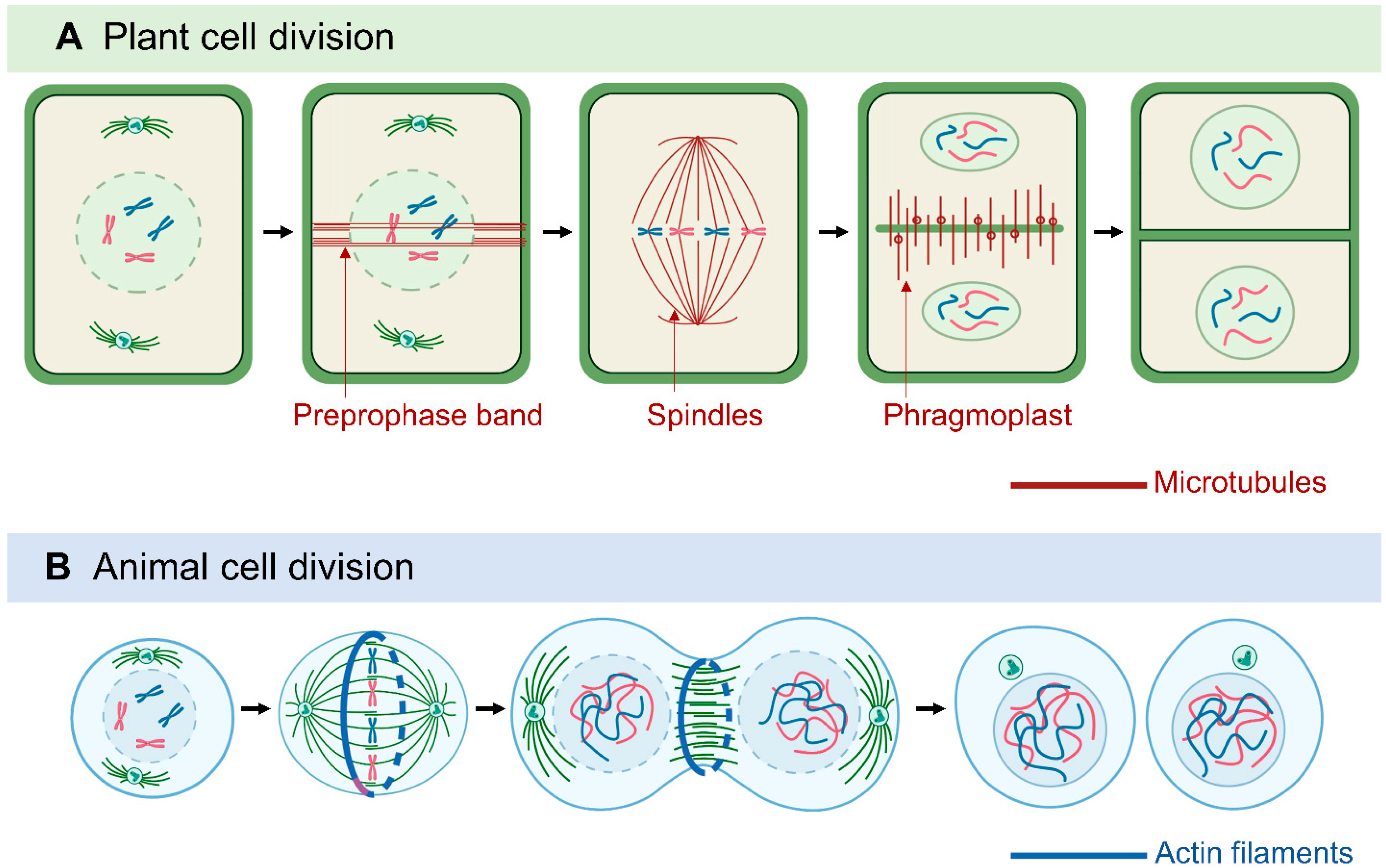
Difference Between Plant & Animal Cell Division Biology Diagrams
The structures possessed by plant cells for performing these two functions create the primary differences between plant and animal cells. Structures Unique to Plant Cells Cell Wall : A wall on the outside of the membrane, which, in combination with the vacuole (as described below), helps the plant cell maintain its shape and rigidity.
Plant cells are basic functional units of plants constituting all cell organelles performing a variety of functions that support the plants' metabolisms. Size and shape Animal cells are generally smaller than plant cells with their cells ranging from 10-30um in length.
Plant Cells vs. Animal Cells (With Diagrams) Biology Diagrams
A plant cell is bounded by a cell wall and the living portion of the cell is within the walls and is divided into two portions: the nucleus, or central control center; and the cytoplasm, a fluid in which membrane-bound organelles are found. Between the primary cell walls of adjacent plant cells, lies a pectic middle lamella. There can be a secondary cell wall that would be located just to the Plant vs Animal Cells: Comparing the Differences. Plant and animals cells contain somewhat different organelles, plus there are distinctions between some that they share in common: Cell Wall. Plant cells are encased in a rigid cell wall composed mainly of cellulose. This wall not only provides structural support but also protects the cell from